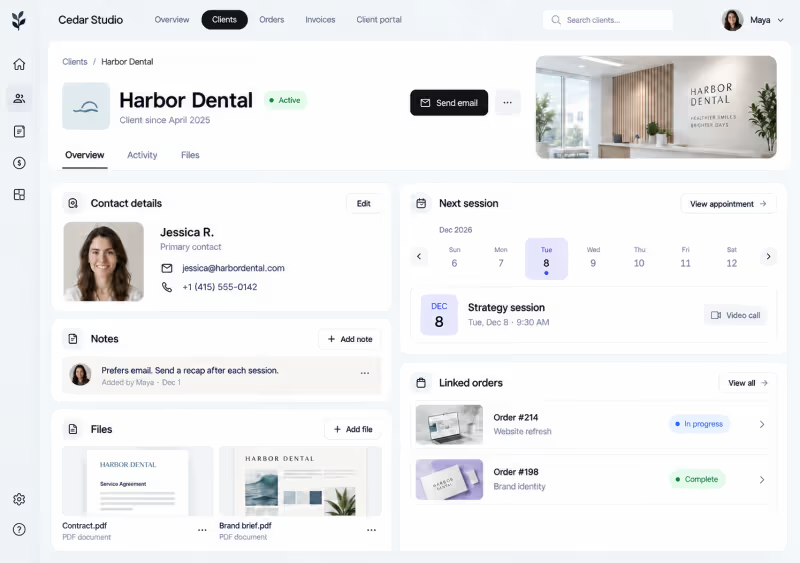
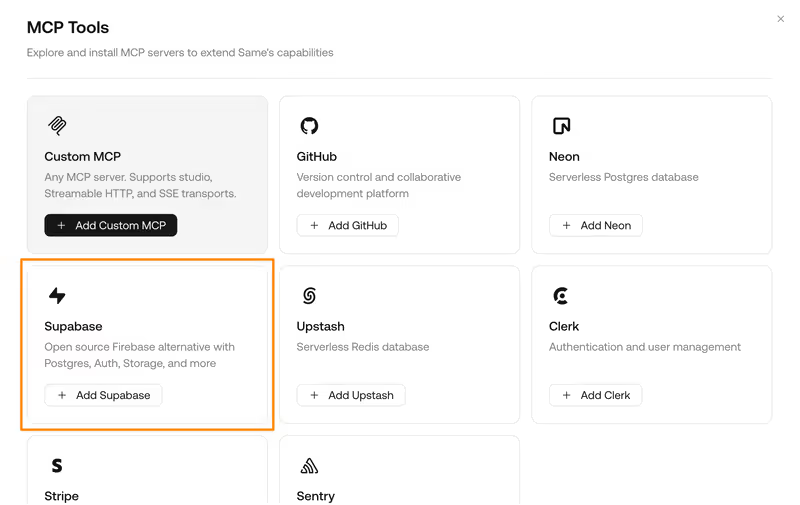
To evaluate Zite and Same.new objectively, we must bypass the generic marketing and look at a concrete job: a small business web app with logins and per-user data. On this job, the two tools diverge completely. Zite approaches the request by tying an AI app generator to a structured, spreadsheet-like database with built-in form validation. Same.new focuses exclusively on the frontend, cloning visual layouts from live URLs and allowing you to manipulate the generated React code via natural language.
This target job is the ultimate test of layout stability and database wiring. While a simple static page is easy to scaffold, a multi-user business app demands reliable authentication, secure state handling, and data privacy. Running a visual page clone on Same.new reveals how quickly pure frontend generation breaks when forced to connect to real databases, while Zite’s structured templates show exactly how rigid the layout boundaries become when you try to customize the visual design outside the AI's template rules.