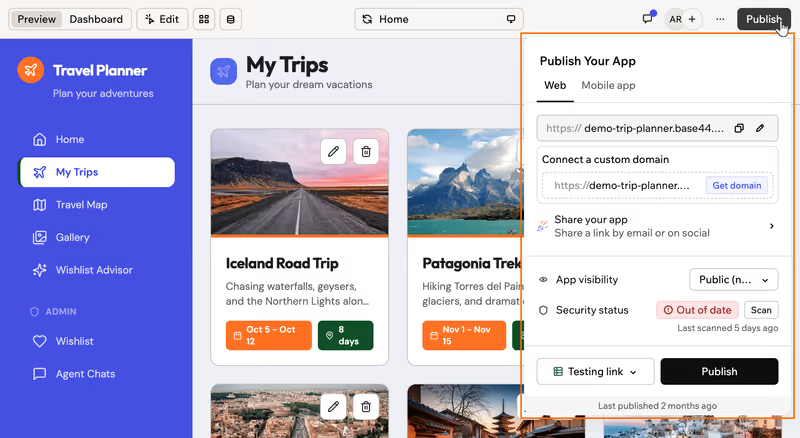

The fairest way to judge Base44 and Zite is on one concrete job: building a simple business web app such as a team tracker, intake portal, or internal request tool. They look similar from the outside because both promise prompt-driven app creation, built-in data handling, and quick deployment. But they diverge once the first draft is done: Base44 leans on a conversational build-and-fix loop, while Zite leans on more structured forms, plans, and table-driven workflows.
That job exposes the failure modes that matter because business apps are not judged on demo speed alone. They are judged on whether edits stay stable, whether permissions and data structure remain understandable, and whether daily use quietly turns into a pricing or maintenance problem. A simple internal tool is exactly where hidden workflow metering, schema fragility, and lock-in stop being abstract product issues and start becoming operational risk.