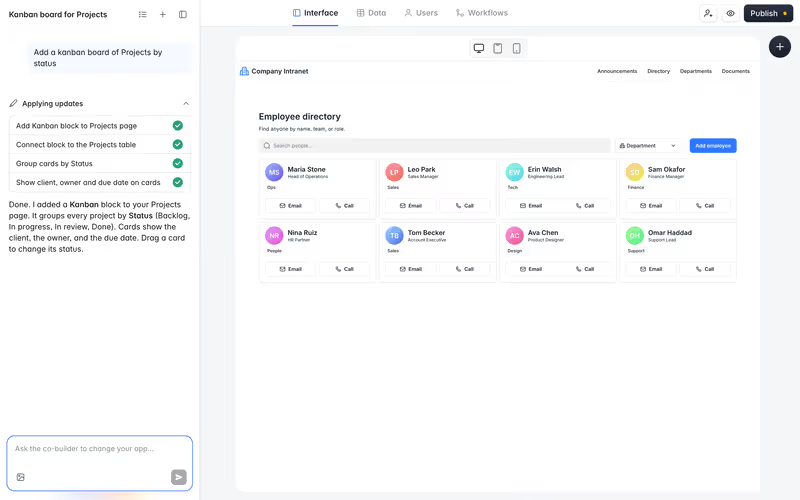
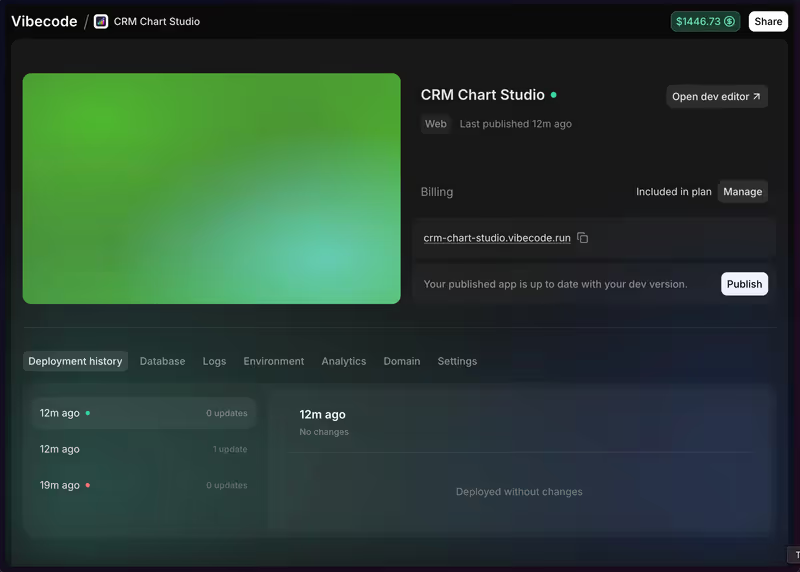
The fairest way to compare Softr and VibeCode is to judge them on a canonical business app: a multi-tenant client portal with real logins, distinct user roles, and per-user data isolation. On paper, both platforms let you build this app using natural language prompts. In reality, they diverge immediately in their core philosophies. Softr leverages a managed, visual no-code engine where secure infrastructure is completely pre-built, while VibeCode operates as a raw code-generation platform optimized for compiling and publishing native iOS and Android packages to official app stores.
Judging this matchup on a client portal exposes the exact tactical challenges that separate modern application builders. In a real-world business app, 80% of the volume is invisible: user authentication, session guards, and strict record-level security. We are not analyzing shiny landing page interfaces; we are looking at the realities of keeping customer A's proprietary invoices completely isolated from customer B, without drowning in technical debt or security holes.