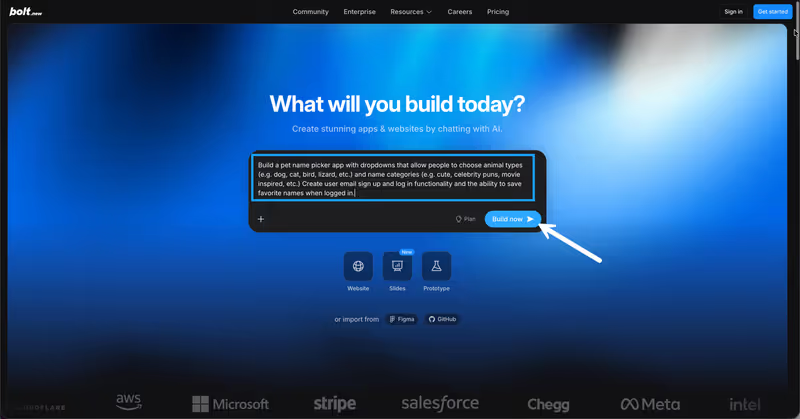
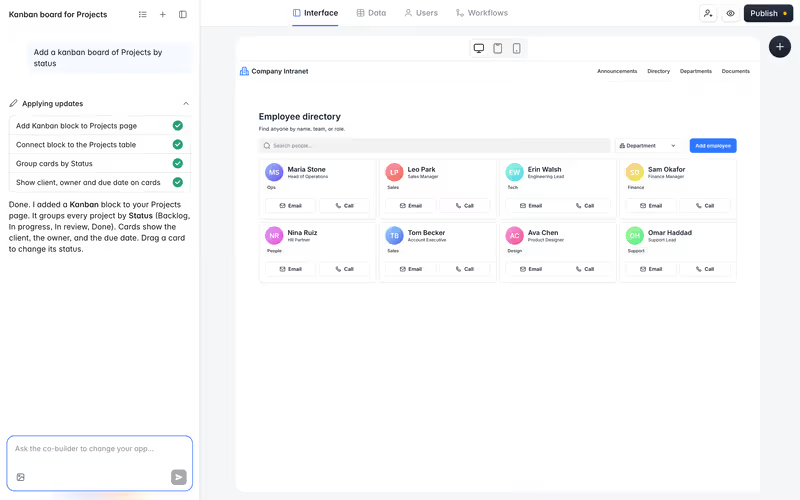
The cleanest way to compare Bolt and Softr is to test them on a canonical operational task: a secure internal tool or client portal. The visible part, a list of customer invoices, takes minutes to design on either interface. The invisible part is the real barrier: user authentication, granular user group visibility, and verifying that Client A cannot load, inspect, or intercept the database records of Client B.
This division represents two entirely different philosophies of building. Bolt generates a complete, raw React and Node.js codebase from scratch using an AI-native browser container, expecting you to maintain it. Softr integrates logins, role visibility, and relational data as visual platform infrastructure with no generated code to audit. Putting both in user-facing production exposes the critical line where code-generation risks turn into technical debt.