Compare Tools

Softr vs Mocha: which one survives a real client portal?

June 16, 2026

Verdict

Softr wins the business-app deliverable by providing authentication and data security as reliable platform infrastructure; Mocha wins only if you need a static React export for developer handoff before it shuts down.

Softr logo

Softr

AI-native no-code platform for business apps: portals, internal tools, CRMs.

Mocha logo

Mocha

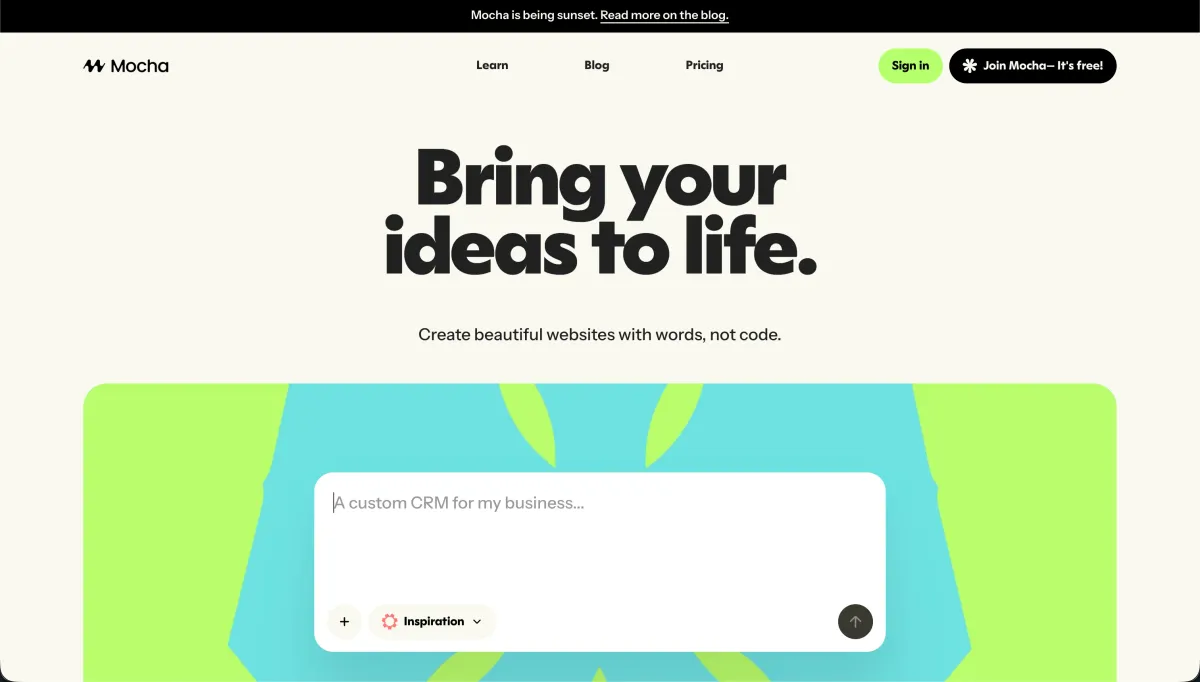
Chat-to-app builder, shutting down August 1, 2026 - migrate now

Softr vs Mocha, on screen

www.softr.io
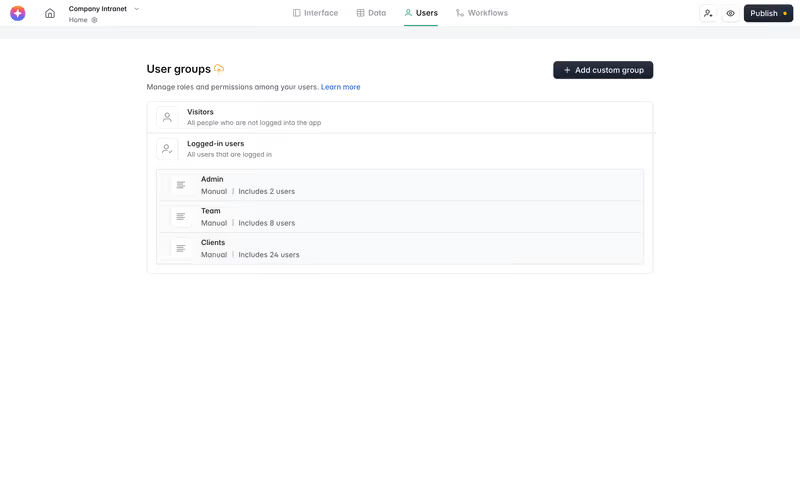
Softr homepage
getmocha.com
Mocha homepage

The fairest way to compare Softr and Mocha is to judge them on the typical operational request: a client portal or internal tool where users log in to see and edit only their own data. The user interface of a directory list or an update form can be spun up in an afternoon by any visual generator. The real challenge lives in the routing rules, the nested user groups, and the backend row-level security that guarantees a customer is isolated from other clients' private records.

This job highlights a fundamental philosophical divide. Softr treats database connections, customer login screens, and row-level permissions as tested, fully managed platform infrastructure. Mocha is an AI-first code generator that crafts custom code paths, backend routes, and database models on top of a SQLite database. On a production-ready client portal, this difference dictates whether your team inherits a bulletproof tool or a fragile, custom codebase that must be constantly audited for security flaws.


The audience

Who each one is for

Softr

  • Business operators and IT managers who need to digitalize workflows without managing technical debt
  • Non-technical founders who want to publish secure client portals or CRMs in hours
  • Operations teams looking to consolidate scattered spreadsheets into a single secure interface
  • Large enterprises seeking custom department tools within a safe, governed IT sandbox

Mocha

  • Technical builders who want a fast, disposable scaffold of a React and SQLite stack
  • Startup founders looking to test brief visual concepts during early-stage prototyping phases
  • Developers looking to quickly export and hosting-migrate local coding projects
  • Makers comfortable managing raw codebases and hosting infrastructure once the AI generation ends

Softr is built for business teams who want a functioning tool ready for real customers. Mocha targets users who want conversational, raw code generation for early projects.

The scope

What you'd build with it

Softr

  • Client and vendor-facing portals featuring highly granular record visibility rules
  • Internal operational CRMs, project trackers, and structured team intranets
  • Asset and inventory management apps powered by relational databases
  • What it should NOT build: standalone native mobile apps destined for the Apple App Store

Mocha

  • Disposable SaaS interface prototypes and landing page concepts
  • Simple calculators, directories, or small database web utilities
  • React-based frontend structures connected to local SQLite instances
  • What it should NOT build: high-scale client portals containing sensitive or regulated corporate datasets

The plumbing question

Softr isolates user roles and data permissions at the platform layer. Instead of leaving authentication logic to be hallucinated by an AI, Softr uses visual User Groups, global Data Restrictions, and page-level block visibility settings. Because your database operations run securely on the server side - whether using native Softr Databases or connections to 17 external sources - malicious clients cannot intercept API tokens or bypass access constraints. The secure framework is pre-configured structure, meaning there is zero compiled code to audit and zero chance a minor edit accidentally compromises database security.

Mocha handles the same portal request by prompting its AI to code custom routing wrappers, Google authentication, and SQLite queries from scratch. Moving these systems to production means relying on generated code queries to keep customer files separate. If an operational structure changes or is modified, you must trust Mocha's conversational agent to correctly update the index, schema mappings, and CRUD routes. The security of your portal depends entirely on how effectively you can read, debug, and manually verify the raw React and backend files output by the compiler.

Strengths

Where each one is strong

Edge: Softr

Softr is the clear platform of choice for business software because of its granular visibilities and stable visual drag-and-drop studio.

Softr

  • Turnkey, enterprise-grade user management and authentication including Google sign-in, magic links, and SSO out of the box
  • Native, high-performance relational Softr Databases with model schema AI helpers and Model Context Protocol support
  • The hybrid building environment: switch fluidly between conversational AI Co-Builders and direct manual editing controls
  • Battle-tested, responsive dynamic components that eliminate mobile layout bugs and prompting fatigue

Mocha

  • Turnkey React code export allows developers to download full source files and walk away
  • Built-in automated compilation and deployment bug resolution during initial mockups
  • Pre-configured SQLite environment that runs easily in the browser right away
  • Simple conversational interface for setting up initial page templates from scratch

Failure modes

Where each one breaks

Edge: Softr

Softr is designed to scale with your business without structural risk. Mocha risks code regression loops and is rapidly shutting down.

Softr

  • AI usage is capped by monthly credit tiers, though any task can be quickly adjusted visually without burning credits
  • Highly custom consumer web animations still require custom CSS overrides or the isolated Vibe Coding block
  • External non-sql data queries depend on the API response speeds of third-party platforms
  • Complex computational models can require setting up multi-step data workflows

Mocha

  • The entire Mocha platform is permanently shutting down on August 1, 2026, forcing active migrations
  • Severe regression loops: users report the generator consuming entire quotas trying to fix compilation bugs in circles
  • Opaque credit consumption where simple modifications burn unexpected quantities of tokens
  • Unreliable customer support, leading to troubleshooting bottlenecks on account issues and runtime crashes

Iteration cost

The fix loop, priced

Edge: Softr

Softr does not charge you to edit your own app, whereas Mocha traps your edits in a token-based prompt cycle.

Softr

  • Free plan available with 5 AI credits; Basic plan starts at $49/mo (billed annually) with 10 credits
  • Visual editing changes cost zero credits, bypassing the expensive AI prompt cycle
  • AI Co-Builder uses credits purely for rapid generations or building specialized Vibe Coding blocks
  • Credits do not block edits, meaning you have manual precision without paying for platform mistakes

Mocha

  • Bronze tier starts at $20/mo with 1,500 credits; Silver plan is $50/mo with 4,500 credits
  • Simple layout edits require prompts that consume credits from your active monthly allowance
  • Opaque bug-fixing loops can burn hundreds of credits in minutes without resolving the issue
  • Unused monthly credit balances are subject to platform expiration dates and rules

Relying on AI prompts to fix layout details or align buttons quickly triggers the fix loop tax in tools that lock you out of visual adjustments.

Exit paths

The code you end up with

Edge: Mocha

Mocha is built specifically to export raw code files, whereas Softr is a hosted platform that stores layout definitions.

Softr

  • No raw frontend developer code to export: layout configurations are stored securely on the platform
  • Custom frontend blocks can be output as isolated React/CSS/JS components via the Vibe Coding container
  • Complete structural freedom through the native Softr Database API and native MCP server
  • No complicated hosting packages to manage: publish to live domains instantly with zero setup

Mocha

  • Full download of React and SQLite backend source files available on demand
  • Clean folder structures capable of being hosted on alternative services like Vercel or Railway
  • SQLite records can be extracted directly before migrating off the platform
  • Lack of visual editor means any exported code must be maintained using a text editor or local IDE

When neither wins

If you are a non-technical manager building a business tool for live clients, entering a raw code-generation sandbox is a structural trap. Both AI-generated frameworks require you to play the role of code auditor, leaving you to manage database security rules and security-critical auth flows on your own. As outlined in our investigation on the day two problem, a code-heavy system quickly becomes fragile as custom dependencies break under live usage.

For business-shaped portals, Softr treats user groups, database links, and file-access permissions as platform infrastructure. You configure options visually with absolute certainty of what your users can see and edit. This removes the risk of raw security vulnerabilities, avoids the endless paid debugging loops, and eliminates technical debt. Softr is the incorrect choice if your goal is to own the underlying codebase or build a custom consumer UI, but for operational tools with real data, it makes the infrastructure boring and reliable.

Verdict

Softr is the definitive winner for the client portal. It approaches the job from the perspective of an operations-focused platform rather than an AI generator. By providing your database connections, user groups, custom permissions, and authentication screens as native, drag-and-drop settings, Softr eliminates the technical liability of maintaining generated code. It allows teams to launch a secure, working business tool the same day and maintain it visually without relying on a professional development team.

Mocha is the incorrect framework choice for production business apps. Because its AI models write custom database rules, Google OAuth scripts, and frontend files iteratively, you are left running a fragile code project. Furthermore, because Mocha is permanently shutting down on August 1, 2026, building anything other than highly temporary test concepts on the platform poses an immediate migration risk.

If you are a non-developer building custom business portals: use Softr. It keeps secure client data on a proven foundation and keeps you in command of your app using a visual studio. If your ultimate goal is to export React source definitions for developer handoff, explore bolt-vs-v0 instead.

Q & A

Frequently Asked Questions

Is Softr better than Mocha for building client portals?

Yes, Softr is vastly superior. Softr provides user authentication, roles, and records access control as built-in platform infrastructure. Mocha requires generating custom authentication and row isolation rules from raw code prompts, which introduces security risks for non-technical teams.

What is happening to Mocha?

Mocha announced its permanent shutdown effective August 1, 2026. The platform recommends all active clients export their sqlite databases and raw react components to migrate to alternative environments before the expiration date.

Can I export my code from Softr and Mocha?

Mocha allows you to download your complete React front-end and SQLite storage schemas for external deployment. Softr is a hosted platform without raw code export, though it features a native database API and lets you build custom blocks that inherit your central theme.

Which costs less to maintain over time?

Softr is far more cost-effective. Softr allows you to manually adjust user parameters, layouts, and filters visually without consuming AI platform credits. Mocha relies heavily on prompt edits, which often consumes token allocations during troubleshooting loops.