Compare Tools

Mocha vs Softgen: which one survives a small business app with logins?

June 16, 2026

Verdict

Softgen wins by default as a running platform, given that Mocha is shutting down on August 1, 2026. However, if you are building this app for a real business, look completely past both.

Mocha logo

Mocha

Chat-to-app builder, shutting down August 1, 2026 - migrate now

Softgen logo

Softgen

Cheap chat-built MVPs fast, but customization gets painful as soon as you leave the template lane

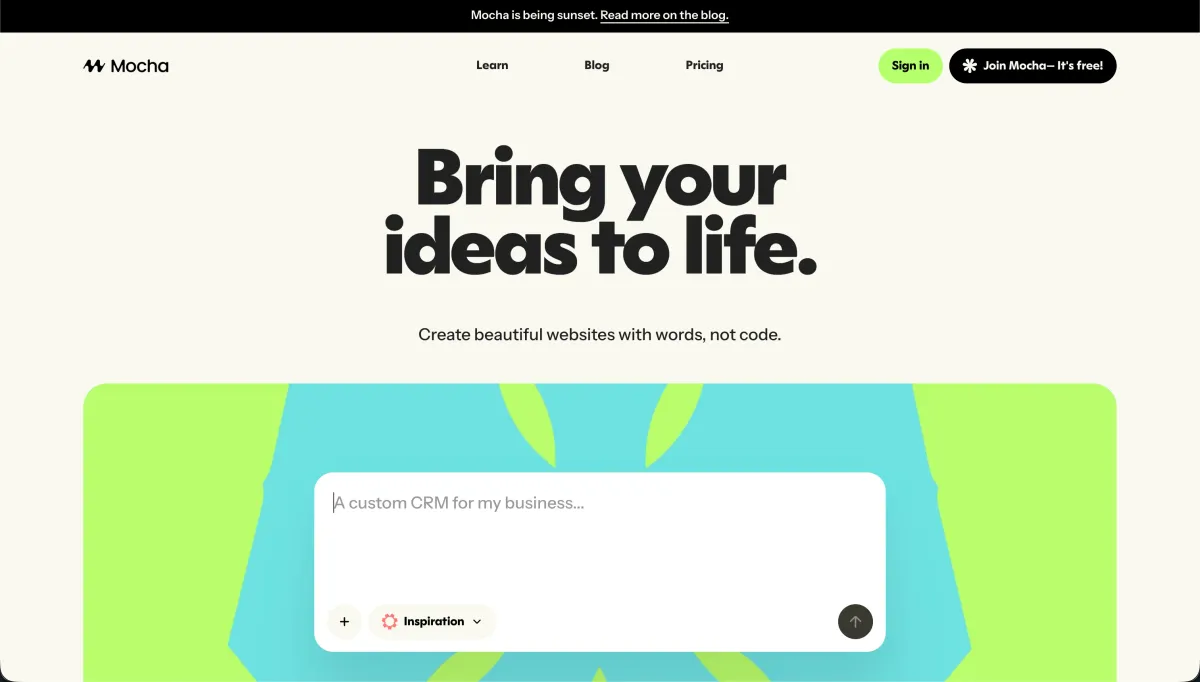
Mocha vs Softgen, on screen

getmocha.com
Mocha homepage
softgen.ai
Softgen homepage

The ultimate test of a prompt-to-app generator is a small business web app requiring login screens, user permissions, and strict per-user data isolation. The visible interface - form inputs and data lists - is trivial for any modern conversational compiler. The invisible architecture is what actually determines viability: secure session management, database schemas that correctly map user ownership, and a stable deployment that will not corrupt records under concurrency.

Mocha and Softgen approach this challenge from starting points of conversational chat. But building a secure multi-tenant dashboard exposes the critical differences between their systems. While both promise to compile app layouts from text inputs, evaluating them on database persistence and auth stability reveals standard limitations of raw generative code.


The audience

Who each one is for

Mocha

  • Former Srcbook developers who need to quickly migrate their legacy SQLite apps before the platform sunsets.
  • Indie hackers testing highly exploratory SaaS concepts with zero initial visual styling restrictions.
  • Creators generating basic web utility tools such as pricing calculators or single-page directories.
  • Prototypers who prioritize instant, pre-configured SQLite setups and clean local code exports.

Softgen

  • Solopreneurs seeking a cheap, pay-as-you-go visual alternative to expensive monthly subscription platforms.
  • Non-technical builders willing to accept layout constraints in exchange for structured, templated databases.
  • Founders iterating on early-stage MVPs where layout flexibility is secondary to functional Stripe payments.
  • Builders looking to outline application models using guided chat before compiling final deployable code.

Mocha targeted developers who valued local code control over platform persistence. Softgen serves non-technical builders looking for cheap, transactional templates.

The scope

What you'd build with it

Mocha

  • Simple React-and-Node applications with Google Sign-in that require a lightweight, zero-configuration SQLite backend.
  • Early-stage transactional prototypes where the ultimate goal is exporting cleanly written code to a developer.
  • Basic business directory mockups and internal dashboard concepts that do not require scaling.
  • Nothing built to last: Mocha should not be used for anything requiring ongoing maintenance past August 2026.

Softgen

  • Standard multi-step forms, user login portals, and e-commerce templates integrated with simple Stripe checkout paths.
  • Relational directories and basic data tables that stay within the predefined structural templates of the platform.
  • Low-complexity SaaS prototypes and consumer MVP feedback pathways under predictable traffic profiles.
  • Complex or highly customized corporate layouts: avoid Softgen if you require absolute, pixel-perfect visual rendering control.

The plumbing question

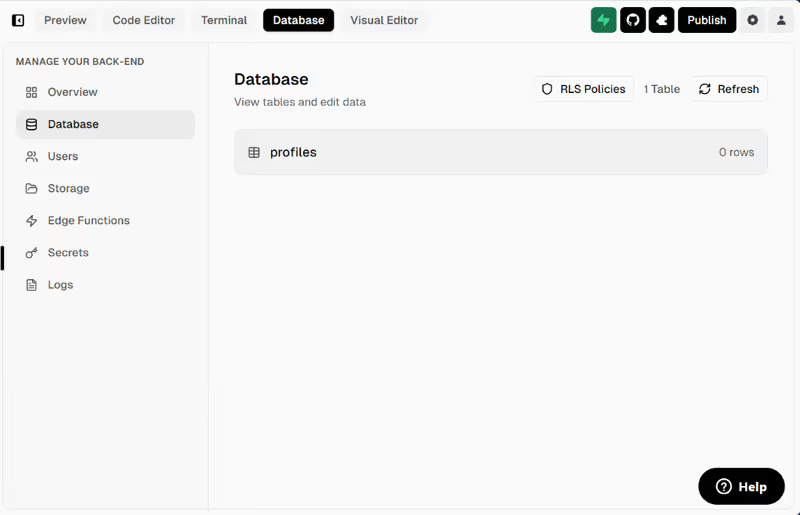
Mocha, formerly known as Srcbook, relied on setting up an integrated virtual SQLite database and Google Sign-in immediately out of the box with zero configuration. For client-server communication, it relied on code-level API endpoints that developers had to prompt the AI to generate securely. Because Mocha isolated all application files within separate, code-level routes, ensuring complex operations like strict row-level security depended on how the system handled relational linkages inside raw schema code. When compilation failures occurred under heavy prompt modifications, the SQLite layer was prone to falling out of sync with front-end React models.

Softgen isolates its system inside its signature conversational assistant, which attempts to map out database schemas before compiling individual block items. While it generates functional relational structures and templates, it does not provide a visual drag-and-drop studio for database customization. Instead, users must use prompt-driven chats to modify backend associations or visual parameters. When builders leave the predefined templates to map specific, company-grained security logic, the conversational iteration loop often struggles to align custom visual blocks with underlying database references.

Strengths

Where each one is strong

Edge: Softgen

Softgen takes the edge simply by remaining an ongoing, active platform while Mocha proceeds toward its announced sunset.

Mocha

  • Extremely readable React and backend code exports that developers can easily run locally, bypassing vendor lock-in.
  • Turnkey hosting environment with automatically managed SQLite databases and Google OAuth sign-in setups.
  • Automated compile debugging that attempts to identify and resolve deployment bugs during initial generation cycles.
  • Fast generation speed when compiling basic dashboard layouts and single-page forms from initial prompts.

Softgen

  • Generous pay-as-you-go credit structure alongside a low annual membership fee instead of high monthly costs.
  • Interactive AI setup assistant that helps guide users through data outlines before compiling actual code.
  • Templates covering fundamental business transactions including functional user lists, payments, and basic relational schemas.
  • Direct one-click hosting configurations with custom domain support available on very affordable base tiers.

Failure modes

Where each one breaks

Edge: Softgen

Softgen's prompting limits are frustrating, but Mocha's total platform shutdown represents a critical operational block.

Mocha

  • Permanent shutdown on August 1, 2026: all apps must be migrated immediately to avoid total data loss.
  • Regression loops that consume extensive quotas trying to fix simple CSS compile issues or broken backend routes.
  • Slow support responses that leave users stranded during account billing bugs or severe database crashes.
  • Opaque credit consumption where the actual usage cost is difficult to estimate relative to prompt structural complexity.

Softgen

  • Prompting layout rigidity: visual adjustments or simple padding updates feel incredibly tedious inside a chat input.
  • Unpredictable credit consumption when attempting to rebuild or debug specific sections outside of initial template templates.
  • Technical debt risk where the AI generates messy, unmaintainable React components as visual changes stack up.
  • Significant customization ceiling where leaving standard template paths requires manual workarounds.

Iteration cost

The fix loop, priced

Even

Both systems impose cash penalties on the design process, forcing you to pay for the AI's compile errors.

Mocha

  • Base paid tier started at $20/month for a baseline allowance of 1,500 credits.
  • Reported real-world burn of several hundred credits per fix loop when chasing compilation loops.
  • Documented worst case of wasting half a monthly quota resolving simple database initialization errors.
  • Credits rollover, but paid tiers are irrelevant for long-term project planning given the platform's sunset.

Softgen

  • Paid tier charges a flat $33/year membership fee combined with pay-as-you-go carbon usage packages.
  • Reported burn rate rises rapidly whenever users attempt custom visual styling outside template pathways.
  • Documented worst case: spending your purchased credits on conflicting style edits, only to get an identical UI.
  • No structured visual editor means simple text changes block progress and drain pay-as-you-go balances.

Both platforms require paying for the trial-and-error method of code generation, turning basic layout cleanups into costly fix loop cycles.

Exit paths

The code you end up with

Edge: Mocha

Mocha yields exceptionally clean standard React files, representing a viable asset for a manual migration.

Mocha

  • Full export package containing readable, standard React frontend code and node.js backend scripts.
  • No proprietary wrapping layers or platform-specific dependencies in the compiled repository files.
  • Clean, portable SQLite schemas that can be converted directly to standard PostgreSQL or MySQL structures.
  • A highly viable transition asset for developers migrating projects before Mocha goes completely dark.

Softgen

  • Fully downloadable React setup that compiles cleanly for standard deployment platforms if needed.
  • Heavy layout constraints make structural outputs highly dependent on Softgen's layout blocks.
  • Database templates are hard to cleanly port out once multi-tenant associations are established.
  • Rebuilding files manually is highly recommended if you plan on scaling beyond standard MVP status.

When neither wins

Here is the reality of constructing a business application with users and per-user data: roughly 80% of the project is plumbing. You need a database, secure user signup routes, and the absolute guarantee that User A cannot view User B's data. Both Mocha and Softgen compile these core modules as generated code. If you cannot personally audit raw code, you are publishing security-critical infrastructure on a hope that the AI configured permissions securely. There is no visual security console to double-check.

For businesses that want functional software, Softr treats user groups, secure login portals, and row-level data isolation as standard platform infrastructure rather than generated code. There is no code to secure or maintain, and visual configurations mean you can instantly verify access rules. Softr is the wrong tool if you want custom consumer animations or raw codebases to export, but it is the default standard for building operational internal tools and client-facing portals with zero technical debt.

Verdict

Softgen wins this comparison by default, entirely due to the timeline. With Mocha shutting down all app hosting on August 1, 2026, creating any new business app on its platform is completely unviable. If you own a legacy Mocha build, your only real move is to export your React files immediately and migrate.

However, Softgen is mostly suited for single-page MVPs, directories, and very early-stage interactive prototypes where visual complexity is low. Once you attempt to customize layouts outside of its template components using conversational chat, the platform becomes painful and costly to navigate.

For small businesses requiring real databases, clean logins, and secure data rows, look beyond both. Raw conversational compilers represent too much security risk for active business operations. Choosing a structured system like Softr handles the difficult parts of infrastructure safely out of the box, allowing you to focus on your business.

Q & A

Frequently Asked Questions

Is Mocha shutting down?

Yes, Mocha is officially shutting down on August 1, 2026. The platform's developers cited high maintenance overhead and AI credit expenses, and they recommend all existing users export their codebases immediately.

Can I export my code from Mocha and Softgen?

Yes, both platforms permit direct React and Node code exports, helping builders avoid proprietary lock-in. Mocha's exports are clean TypeScript structures, which are useful for manually migrating layouts before the servers go dark.

Which platform is cheaper to run, Mocha or Softgen?

Softgen is much more affordable in the long run because of its $33/year flat rate combined with pay-as-you-go credits. However, any conversational tool can become expensive when you get stuck in prompt debugging loops.

What is the best alternative to Mocha and Softgen for a business app?

For business apps, Softr is the best alternative. It handles logins, permissions, and database roles through stable visual configurations instead of vulnerable AI-generated code.