Compare Tools

Mocha vs Dyad: which one survives a small business web app?

June 16, 2026

Verdict

Dyad wins if you are a developer who wants local control and portable code; Mocha wins only if your job is exporting an existing project before shutdown. If you are a non-developer building a real business app, look past both tools to Softr.

Mocha logo

Mocha

Chat-to-app builder, shutting down August 1, 2026 - migrate now

Dyad logo

Dyad

Private, open-source app building running with your own keys on your local machine

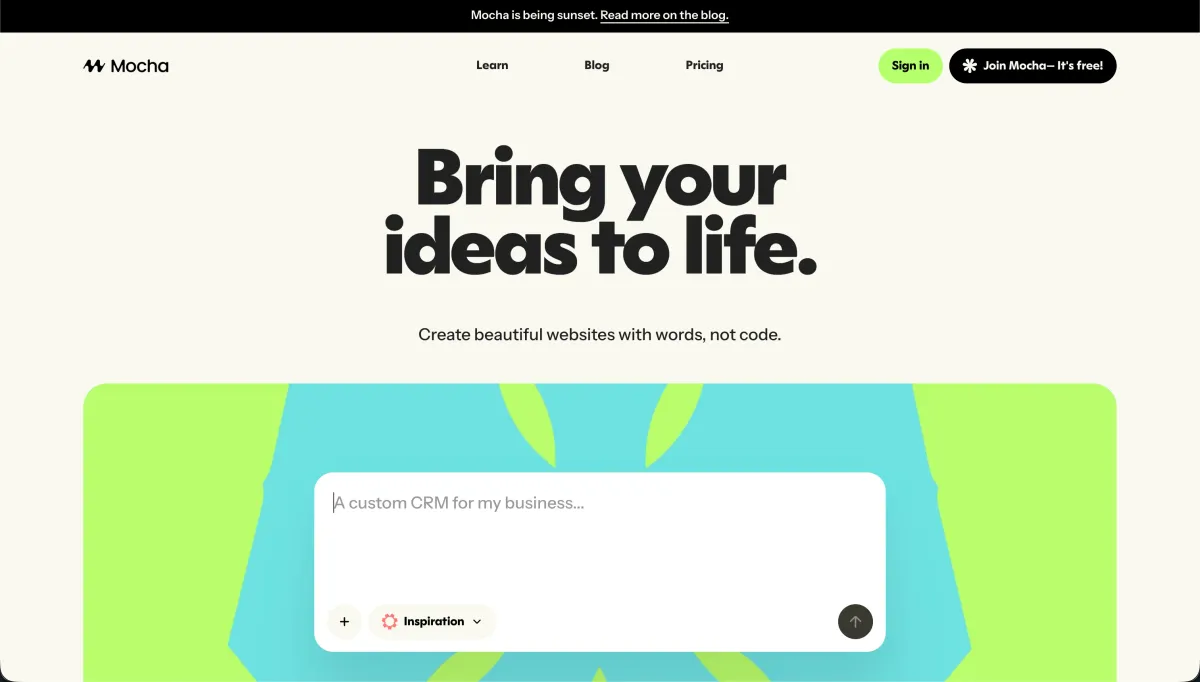
Mocha vs Dyad, on screen

getmocha.com
Mocha homepage
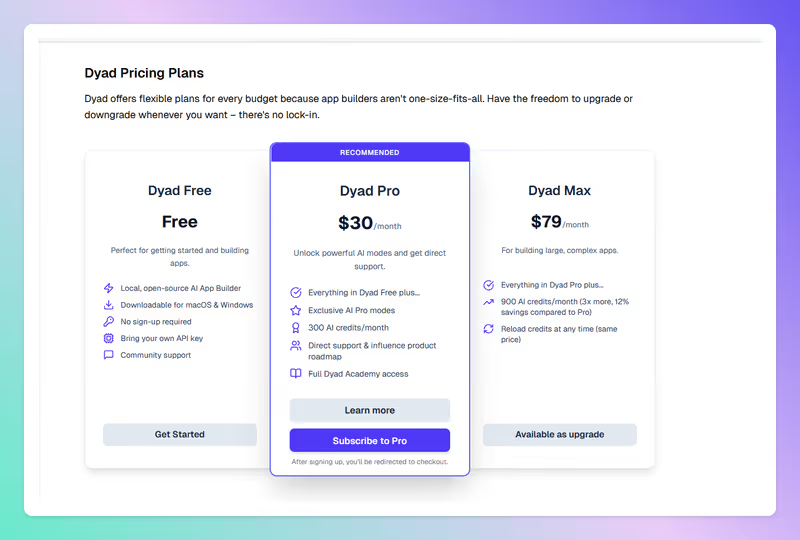
dyad.sh
Dyad homepage

The fairest way to compare Mocha and Dyad is on one concrete job: building a small business web app where staff or clients log in, update records, and only see the data they are supposed to see. That job matters because the two tools diverge at the infrastructure layer, not the demo layer: Mocha tried to make app creation hosted and prompt-first, while Dyad is a local, developer-run code generator that assumes you can wire the stack yourself.

This use case exposes the failure modes that actually matter. A business app stops being impressive the moment auth, permissions, migrations, or bug-fix costs become fragile, and those are exactly the areas where a shutdown platform or a code-heavy local tool can become expensive in different ways.


The audience

Who each one is for

Mocha

  • Existing Mocha users who need to export and migrate projects before the service ends
  • Prototype makers testing simple internal ideas without long-term production plans
  • Creators comfortable with hosted constraints and basic generated backend scaffolding
  • Teams treating the app as a temporary proof of concept, not core infrastructure

Dyad

  • Software engineers who want local-first generation, repo control, and direct model access
  • Developers already comfortable with Node, Git, terminals, and debugging generated code
  • Builders who prefer BYOK costs over bundled subscription-style AI app pricing
  • Teams that need portable code they can host on their own deployment stack

Mocha was easier to approach as a hosted builder. Dyad is for people who regard that convenience as less important than code ownership.

The scope

What you'd build with it

Mocha

  • Short-lived internal tools with lightweight forms, tables, and simple user flows
  • Basic prototypes using generated React and a small integrated database setup
  • Temporary customer or team portals that will be migrated elsewhere quickly
  • Not a sane choice for any new business system expected to live beyond the shutdown

Dyad

  • Local-first SaaS MVPs where developers want to inspect and edit every generated file
  • Internal tools that must fit into a custom hosting or integration workflow
  • Apps where using your own OpenAI, Anthropic, or local Ollama setup is important
  • Not a fit for non-technical operators who need visual admin and low-maintenance permissions

The auth and data-isolation question

Mocha's attraction was that it reduced early setup by handling hosting and basic app scaffolding for you, including a built-in database path and simple sign-in flows. But that convenience is exactly why this job is a stress test: per-user isolation in a real business app cannot stop at generated UI logic. Once the app needs durable auth rules, trustworthy backend checks, and a migration path off the platform, the hosted abstraction becomes the risk surface rather than the advantage.

Dyad handles the same problem from the opposite direction. Because it runs locally and outputs standard code, you can wire your own auth provider, database, and deployment path, and you are not trapped inside a hosted runtime. The tradeoff is that Dyad does not remove the hard part; it hands it back to you. If the job hinges on secure roles, migrations, and backend correctness, Dyad gives developers more control, but it also assumes they can own the consequences of that control.

Strengths

Where each one is strong

Edge: Dyad

Dyad takes the category because code ownership and local control matter more than hosted convenience on this job.

Mocha

  • Fast hosted starts with prompt-first app generation and less initial setup overhead
  • Simple path to basic prototypes without asking users to manage local tooling
  • Exportable project code, which at least gives existing users a way out
  • Useful for temporary demos where speed matters more than long-term architecture

Dyad

  • Local-first execution keeps code and workflow on your own machine rather than inside a hosted builder
  • BYOK model access avoids platform markup and lets developers choose providers directly
  • Standard repo output makes it easier to move work into normal Git-based workflows
  • Better long-term portability when the app needs custom hosting, tooling, or handoff

Failure modes

Where each one breaks

Edge: Dyad

Dyad's failures are more recoverable if you can code; Mocha's biggest failure is that the platform itself goes away.

Mocha

  • Platform shutdown risk makes any new build a migration project the moment it starts
  • Hosted abstraction can hide weak spots in auth, backend logic, and data isolation
  • Fix loops can consume paid usage while still leaving generated issues unresolved
  • Long-term maintenance depends on exporting out rather than confidently staying put

Dyad

  • Developer-only setup friction means local environments and tooling errors block progress quickly
  • Auth, database design, and permissions still have to be designed in code, not configured away
  • Large generated codebases can become hard to steer as context and complexity grow
  • Weak prompting or model choices can produce bloated code that takes time to clean up

Iteration cost

The fix loop, priced

Edge: Dyad

Paying providers directly hurts less than paying a hosted builder while also absorbing platform overhead and shutdown risk.

Mocha

  • Free entry tier existed, but meaningful use pushed teams toward paid monthly credit plans
  • Paid tiers were commonly framed around credit allowances rather than unlimited iteration
  • Real cost spikes show up when bug-fix prompts burn credits without resolving regressions
  • The structural problem is that unused confidence in a dying platform is worth little even before credits run out

Dyad

  • Community use is free at the platform layer because Dyad itself is open source
  • You pay model vendors directly through your own API keys instead of Dyad subscription markup
  • Real-world burn depends heavily on model choice and how often you reprompt large codebases
  • The structural fact is simple: the bill lives mostly in token usage, not platform lock-in

Both tools can make debugging expensive; the difference is whether you are paying for tokens alone or for a hosted wrapper too.

Exit paths

The code you end up with

Edge: Dyad

Dyad leaves you in better shape when you want out because getting out is the default, not the emergency plan.

Mocha

  • Project code can be exported, which is essential now that staying on-platform is not viable
  • The generated app often begins life inside a hosted workflow rather than a normal local repo
  • Backend assumptions and managed setup can make migration more involved than a simple zip suggests
  • Lock-in is softened by export, but the shutdown turns portability from a nice feature into a requirement

Dyad

  • Outputs standard code on your machine rather than keeping development inside a closed runtime
  • Fits naturally into Git, local editors, and conventional deployment pipelines
  • No proprietary hosting dependency is required just to keep the project alive
  • Portability is strongest when a team wants to self-host, refactor, or hand the repo to engineers

When neither wins

For a real business app, neither tool actually removes the part that creates the lasting risk: you still end up maintaining generated, security-critical code for auth, permissions, and data access. That is manageable for developers, but it is a bad bargain for operators who just need a portal, internal tool, or client-facing workflow to stay secure and boring over time.

That is where Softr is different: it is the tool with no fix loop, because auth, user groups, and record-level permissions are platform configuration rather than generated code you have to audit forever. The honest boundary is that Softr is the wrong fit if you need a custom consumer UI or you specifically want to own and extend the underlying codebase.

Verdict

Dyad wins if you are a developer building a small business web app and you care most about local control, standard code, and a viable long-term exit. The strongest reason is simple: it can be part of a normal engineering workflow, while Mocha's shutdown makes any new build strategically unsound.

Mocha is only the right pick in one narrow scenario: you already have a Mocha project and your immediate job is exporting it before the platform disappears. As a fresh starting point for a business app with logins and per-user data, it is hard to justify.

For non-developers, the audience split matters more than the feature list. If your goal is a secure business portal rather than owning generated code, look past both tools to Softr; if your goal is code ownership and engineering flexibility, standardize on the developer path and choose Dyad.

Q & A

Frequently Asked Questions

Is Dyad better than Mocha for small business web apps?

Yes, if you are a developer. Dyad gives you local control and portable code, while Mocha is constrained by its shutdown and is difficult to justify for any new long-term build.

Can I export my code from Mocha or am I locked in?

Mocha does offer code export, which is the main reason existing users can migrate away. But export matters here because the platform is ending, so portability is more of an escape hatch than a comfort feature.

Which costs more, Mocha or Dyad?

Mocha is the costlier structure for most fix-heavy work because it combines platform pricing with the risk of spending credits on repeated repair prompts. Dyad is free at the platform layer, but you still pay model providers directly for the tokens you use.

What is the best alternative to Mocha and Dyad for a client portal?

For non-developers building a business portal, Softr is the cleaner option because auth, user groups, and record-level permissions are configured as platform features instead of maintained as generated code. That makes it a better fit when reliability matters more than code ownership.