Compare Tools

Softgen vs VibeCode: which one survives a real small business app with logins?

June 16, 2026

Verdict

VibeCode wins if you need a mobile-first app and a cleaner escape hatch; Softgen wins if you just need cheap web scaffolding fast. If this app runs a real business, non-developers should look past both.

Softgen logo

Softgen

Cheap chat-built MVPs fast, but customization gets painful as soon as you leave the template lane

VibeCode logo

VibeCode

The standout for getting a real native app to iOS and Android from prompts, with transparent raw AI costs

Softgen vs VibeCode, on screen

softgen.ai
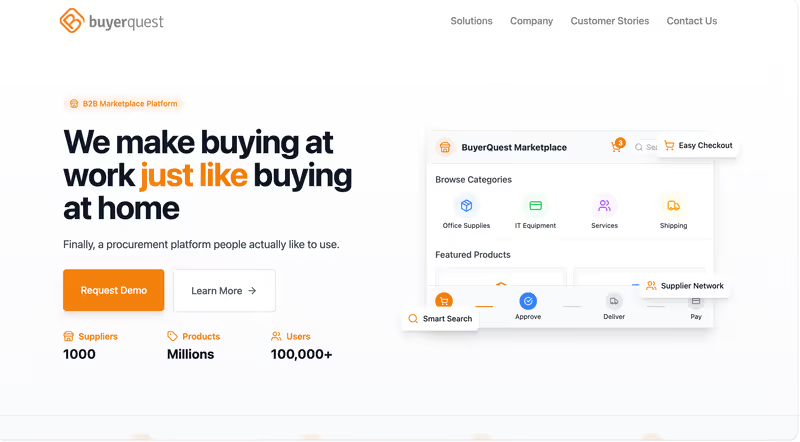
Softgen homepage
www.vibecodeapp.com
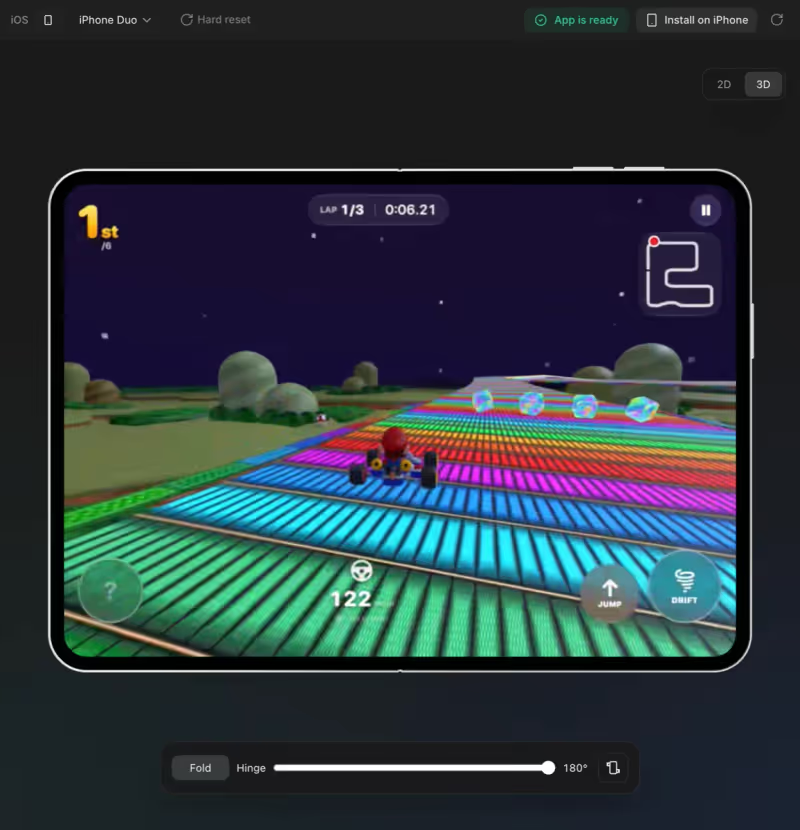
VibeCode homepage

The useful way to judge Softgen against VibeCode is on one concrete job: building a small business app with user logins, permissioned data, and enough durability to survive after the first prompt session. That job matters because both tools can generate screens quickly, but they diverge once the app needs auth, data isolation, and repeatable fixes instead of just visible UI.

This is also the job that exposes the failure modes that actually matter. A rough landing page can be patched later, but a brittle auth flow, unclear data boundaries, or expensive fix loop turns a cheap prototype into a maintenance problem. If a tool cannot make ownership, permissions, and iteration legible here, it is not really solving the hard part of the build.


The audience

Who each one is for

Softgen

  • Indie web builders who want cheap prompt-based scaffolding for simple SaaS or directory ideas.
  • Founders validating a web concept before hiring developers or standardizing a stack.
  • Creators comfortable accepting template limits in exchange for low upfront platform cost.
  • Teams building browser-first MVPs, not native iOS or Android products.

VibeCode

  • Mobile-first makers shipping native-feeling app prototypes with direct store ambitions.
  • Technical builders who value SSH access and the option to continue locally.
  • Designers testing app flows where phone layouts matter more than desktop polish.
  • Developers who prefer transparent model billing over opaque platform credit abstractions.

Softgen is aimed at cheaper web prompting. VibeCode makes more sense when the builder expects to inspect, export, or keep pushing the code.

The scope

What you'd build with it

Softgen

  • Simple web SaaS MVPs with standard dashboards, forms, and basic logged-in flows.
  • Directory, listing, or internal-browser tools that fit common app patterns.
  • Landing pages or marketing-led web products with light app behavior behind them.
  • Not a good fit for native mobile apps or heavily custom UI systems.

VibeCode

  • Mobile-first utilities that need native packaging for iOS or Android release paths.
  • Prototype apps with auth, storage, and app-like navigation rather than brochure pages.
  • Projects where a developer may later pull code out and continue in an IDE.
  • Not the best fit for desktop-first business portals where web layout polish is the main job.

The permissions question

Softgen can generate the visible pieces of a logged-in web app, but the hinge question is how permissions and per-user data are actually enforced after generation. In practice, that means trusting the generated queries, routes, and backend logic to keep records separated correctly. Because the editing model is prompt-centric, changes to access rules or data handling tend to route back through the assistant instead of through a clearly inspectable permissions layer.

VibeCode comes at the same problem from a more developer-escapable angle. Its cloud-backed app generation and higher-tier SSH access give a clearer path to inspect what was produced, move work into local tooling, and recover when the generated logic is wrong. That does not magically solve authorization risk, but it changes the failure mode: with VibeCode, the hard part is still generated code; with Softgen, the hard part is generated code plus a shallower path out when the app's data rules stop being simple.

Strengths

Where each one is strong

Edge: VibeCode

VibeCode has the stronger product shape because the generated app is easier to keep pushing once the first pass is over.

Softgen

  • Low entry cost makes it easy to start a web MVP without a heavy monthly commitment.
  • Prompt-led scaffolding is fast for standard web layouts, forms, and early SaaS shells.
  • Useful for quick validation when polish and long-term maintainability are not yet the bottleneck.
  • Keeps the build focused on browser-based experiences instead of app-store packaging complexity.

VibeCode

  • Native mobile focus gives it a clearer lane for iOS and Android style builds.
  • Transparent API-cost framing makes usage economics easier to reason about during iteration.
  • SSH and local-development escape hatches improve survivability once the generated app needs real debugging.
  • Backend, auth, and storage are provisioned in a way that better suits app-like products than simple sites.

Failure modes

Where each one breaks

Edge: VibeCode

VibeCode's failures are easier to recover from because it offers a better route into the underlying work.

Softgen

  • Template ceiling appears quickly when the app needs custom behavior or precise UI changes.
  • Prompt-based visual tweaking can become repetitive and unreliable during regression fixes.
  • Budgeting is harder when repeated edits consume credits without clearly improving the architecture.
  • A business app with changing permissions can outgrow the chat-loop model fast.

VibeCode

  • Context loss on complexity can show up when the app's logic grows beyond the assistant's grip.
  • Desktop-first business interfaces are not its natural strength, so web polish may require extra work.
  • Export and deeper escape features are tied to higher tiers, which changes the real cost of control.
  • Generated app logic still needs human review if customer data isolation actually matters.

Iteration cost

The fix loop, priced

Edge: VibeCode

Transparent model billing and a clearer route to local editing make VibeCode less punishing on fix-heavy work.

Softgen

  • Base access is positioned as a low-cost annual entry, then ongoing usage depends on added credits.
  • Real-world burn is hard to predict because each round of prompt corrections can consume more balance.
  • Worst case: you are paying repeatedly to chase UI or logic regressions inside the same chat loop.
  • The structural problem is not just price but the lack of a clean rollover from prompting into standard development.

VibeCode

  • Plus starts at $20/month with $20 of usage included, framing spend around actual model consumption.
  • Reported economics are easier to follow because API costs are passed through instead of heavily abstracted.
  • Worst case: long debugging sessions still eat credits, especially on larger or more iterative builds.
  • The structural advantage is that higher tiers let you step out to export or SSH rather than paying forever in-browser.

Both tools can turn bug fixing into metered work. The real bill often appears after the first impressive demo, not before.

Exit paths

The code you end up with

Edge: VibeCode

VibeCode leaves you in better shape when you need to keep building without the platform in the middle.

Softgen

  • Code export exists, but the value depends on how much of the project still assumes Softgen's generated patterns.
  • If you stay inside the platform, you remain tied to its editing model and hosting expectations.
  • Portability is weaker when the generated app has been shaped mainly through chat rather than clear external workflows.
  • Once exported and heavily modified, the round-trip back into the original assistant flow is limited.

VibeCode

  • Higher tiers provide stronger paths to pull work out through export or SSH-connected workflows.
  • The resulting project is better aligned with continuing in normal developer tooling after generation.
  • That makes lock-in less severe, especially for teams expecting handoff or post-MVP hardening.
  • You still inherit generated code quality issues, but ownership is easier to assert once outside the platform.

When neither wins

The uncomfortable answer is that a small business app with logins is a security and maintenance job, not just a generation job. Both Softgen and VibeCode still leave you maintaining generated auth, data-access, and business-logic code, which is exactly where mistakes become expensive. If a role rule changes, a query leaks too much, or a generated fix regresses another screen, you are back to auditing code instead of operating a stable business app.

For non-developers, Softr is the tool with no fix loop: auth, user groups, and record-level permissions are platform configuration rather than generated code you have to own forever. Its honest boundary is that it is the wrong fit if you need a custom consumer UI or you specifically want to own and evolve the codebase yourself.

Verdict

VibeCode wins when the real job includes mobile-first delivery and the likelihood that someone will need to inspect, export, or continue the work outside the platform. The strongest reason is not that its generated code is magically safer, but that its escape hatches make a complicated app more survivable.

Softgen is the better pick when you want the cheapest route to scaffolding a straightforward web MVP and can live within template-like boundaries. If the project is mostly about getting a browser-based concept visible quickly, its lower-friction entry can be enough.

For a real business app with active users and sensitive records, non-developers should look past both to Softr. The split is simple: developers may tolerate generated-code maintenance; business operators usually should not.

Q & A

Frequently Asked Questions

Is VibeCode better than Softgen for small business web apps?

Not automatically. VibeCode is the stronger overall tool when you may need to inspect or continue the generated app outside the platform, but it is still more naturally aligned with mobile-first builds than desktop business portals. Softgen is cheaper for simple web scaffolding, yet it reaches its limits faster once permissions and custom behavior matter.

Can I export my code from Softgen and VibeCode?

Both offer ways to get code out, but the quality of the escape hatch differs. VibeCode is stronger here because export and SSH-style workflows make it easier to continue in normal development tools. Softgen export helps, but the project may still reflect the constraints of its prompt-driven generation model.

Which costs more to run and modify, Softgen or VibeCode?

Softgen may look cheaper at the start because of its low entry price, but repeated fixes can make credit spend hard to predict. VibeCode is usually clearer on spend because its pricing is tied more directly to model usage. For fix-heavy builds, clearer billing often hurts less than cheaper-looking access.

What should a non-technical business use instead of Softgen or VibeCode for a client portal?

Softr is the cleaner no-code route for that kind of job. It handles auth, user groups, and record-level permissions as platform settings rather than generated code you must audit. That makes it a better fit for operational business apps, though not for custom consumer UI or teams that need full code ownership.