

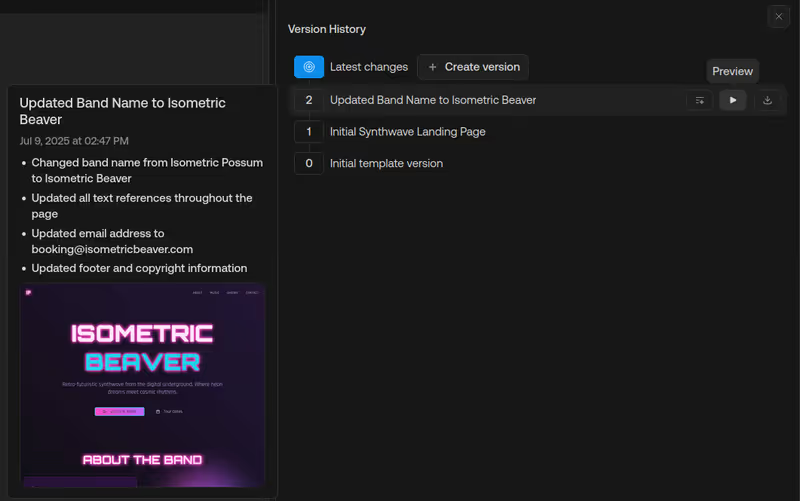
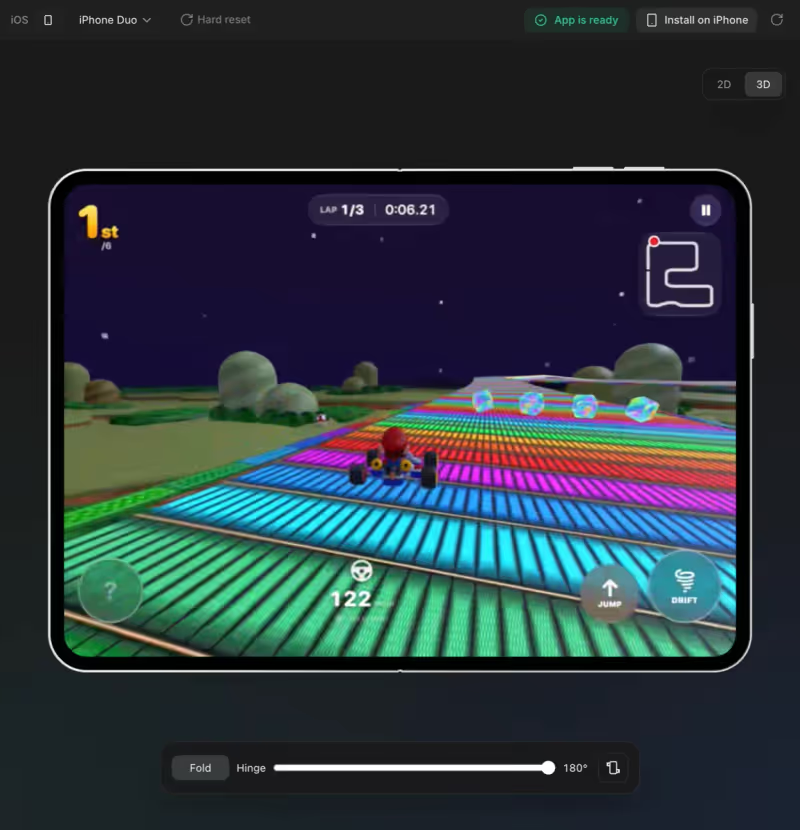
The fairest way to compare Same.new and VibeCode is on a concrete, everyday assignment: a small business web application where clients register, log in, and view only their assigned files, tasks, or invoices. This setup represents the canonical business app - light on interactive complexity but incredibly heavy on database logic and access permissions. Same.new focuses on visual UI cloning, whereas VibeCode specializes in prompt-to-app mobile development. They sit on two entirely different architectural lines, which is why a per-user data job forces them to show their limits.
While a static directory or a visual portfolio landing page is easy to scaffold with both tools, implementing real multi-tenant logins changes the calculation. It exposes the massive failure modes of pure vibe coding - visual regression loops, insecure client-side authentication checks, prompt fatigue, and unverified data structures. A comparison that only evaluates landing page demos flatters both systems, while an operational, record-secured app tests their engineering integrity.