
Compare Tools

Mocha vs Same.new: which one survives a real small business app?

June 16, 2026

Verdict

Mocha wins if you need a short-term full-stack prototype with a built-in database; Same.new wins if you only need a visual clone or UI mock; for a real business app with live user data, look past both.

Mocha logo

Mocha

Chat-to-app builder, shutting down August 1, 2026 - migrate now

Same.new logo

Same.new

Clone a live site's UI into editable React fast, if you stick to simple layouts

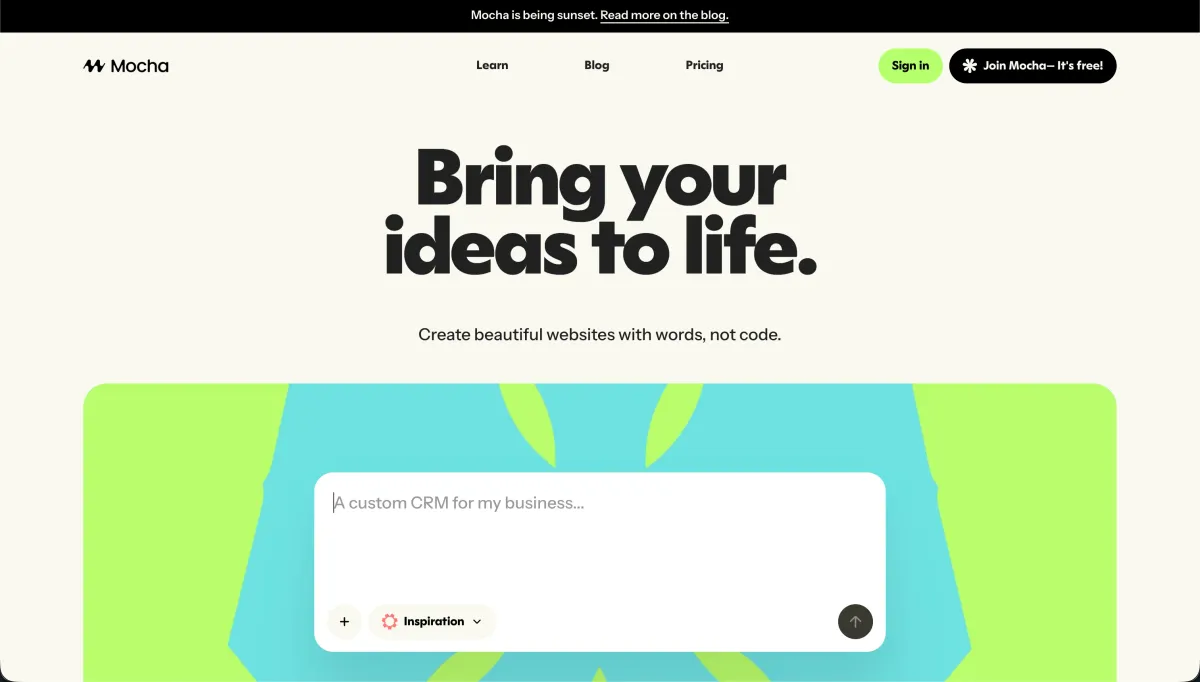
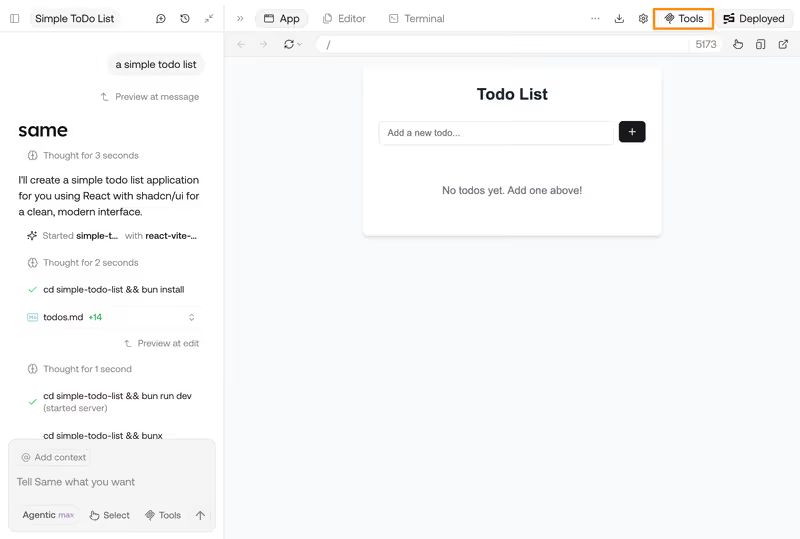
Mocha vs Same.new, on screen

getmocha.com
Mocha homepage
same.new
Same.new homepage

The cleanest way to compare Mocha and Same.new is on one concrete job: building a small business web app with secure logins, forms, and per-user records. That job forces a real split between them. Same.new is strongest when the work is mostly visual imitation and frontend scaffolding, while Mocha at least attempts the full-stack problem with generated backend routes, auth, hosting, and a built-in database.

That job also exposes the failure modes that actually matter. A pretty dashboard mock can survive messy generated code for a while; a client portal or internal tool cannot. Once the app holds customer data, the question stops being how fast it looks finished and becomes whether auth, permissions, and data isolation were implemented correctly enough to trust.


The audience

Who each one is for

Mocha

  • Non-technical founders who want a fast full-stack prototype with auth included
  • Operators testing internal tools before handing the exported code to developers
  • Developers who want a generated React app plus backend routes to inspect
  • Teams validating workflow ideas quickly despite the platform's shutdown timeline

Same.new

  • Frontend designers who need a fast clone of an existing layout
  • Agencies mocking up client-facing screens without serious backend requirements
  • Developers who want editable React and Tailwind scaffolds for visual iteration
  • Prototypers focused on presentation flows rather than secure application logic

Mocha attracts people trying to get business logic on the board quickly. Same.new attracts people trying to get the screen right first.

The scope

What you'd build with it

Mocha

  • Internal tools with forms, simple tables, and basic user authentication
  • Early SaaS MVPs that need a working data model fast
  • Short-lived prototypes you plan to export and rehost elsewhere
  • Not a safe long-term home for production apps given the August 1, 2026 shutdown

Same.new

  • Landing pages and marketing screens cloned from existing sites
  • Frontend mockups for dashboards, settings pages, and simple CRUD views
  • UI experiments where React and Tailwind output matters more than backend depth
  • Not a good fit for apps needing secure storage, permissions, or relational workflows

The auth and data-isolation question

Mocha handles this question by generating more of the stack for you. Its pitch is that you can get a React app, hosted environment, built-in SQLite database, and Google sign-in without assembling the plumbing by hand. For this job, that matters because the hinge question is not whether a table can render, but whether user identity, routes, and records line up safely. The catch is that the auth checks, route behavior, and schema decisions are still generated code, so the builder inherits the burden of verifying that the generated logic really enforces the permissions the app depends on.

Same.new handles the hinge question indirectly because it is mainly a UI generator. It can produce React and Tailwind scaffolding, and it is useful when the primary work is recreating a layout from a live URL or iterating visually through prompts. But once the app needs real sessions, secure writes, and per-user data boundaries, the builder has to bolt on external services and generated integration code. That shifts the hard part into fragile prompt-driven backend glue, which is exactly where business apps become expensive to fix and risky to trust.

Strengths

Where each one is strong

Edge: Mocha

Mocha gets the edge because this job needs working backend scaffolding, not just a convincing interface.

Mocha

  • Built-in full-stack starting point with hosting, SQLite, and Google sign-in already wired
  • Exports a more complete project shape, including backend routes and database structure
  • Cuts setup time for CRUD-style prototypes that would otherwise need manual bootstrapping
  • Makes more sense than a pure UI tool when the app needs forms and stored records

Same.new

  • Fast visual cloning from live URLs for layout and styling exploration
  • Generates React and Tailwind output that is easy to tweak for frontend work
  • Useful for rapid iteration on screens, components, and design variants
  • Lower-stakes choice when the deliverable is a mock rather than a secure application

Failure modes

Where each one breaks

Edge: Mocha

Mocha's failures are serious, but Same.new's are less compatible with the job because they start from a frontend-only position.

Mocha

  • Platform shutdown risk means anything you build must be migrated before August 1, 2026
  • Credit burn can spike during repeated attempts to repair backend logic or routing
  • Generated auth and data rules still need human inspection before production use
  • Support and billing clarity can be weak when a project gets technically messy

Same.new

  • UI rewrite volatility can break large chunks of layout during small prompt changes
  • No native backend means business-critical logic must be added through extra generated glue
  • Complex app states and data-driven interactions are a weak fit for its core workflow
  • Token burn becomes painful when the model keeps rewriting files without fixing structure

Iteration cost

The fix loop, priced

Even

Both pricing models hurt when the app needs repeated AI-led repairs instead of straightforward edits.

Mocha

  • Free plan includes 120 credits; Bronze starts at $20 per month for 1,500 credits
  • Reported burn rate can jump fast once prompts target backend bugs instead of simple UI edits
  • Worst case is draining a monthly credit allotment in repeated route or auth rewrite attempts
  • Additional credit top-ups reduce hard stops, but they do not remove the fix-loop tax

Same.new

  • Pro plan costs $10 per month and includes 2 million generation tokens
  • Real-world token use becomes unpredictable when whole files get rewritten for small changes
  • Worst case is heavy token drain with little progress on unstable visual or structural edits
  • Tiered monthly plans cap spend better than pure usage billing, but retries still cost

Both tools charge you while the model is being wrong; the real bill shows up once iteration turns into repair.

Exit paths

The code you end up with

Edge: Mocha

Mocha leaves you with a more complete app skeleton, even if you still have to audit and migrate it.

Mocha

  • Exports React frontend code plus backend routes and SQLite schema structure
  • Gives developers more to salvage when moving the app to another host
  • Less immediate platform lock-in because the generated project is broader than just UI files
  • Still requires manual migration work before the platform sunset

Same.new

  • Exports frontend React components and Tailwind styling for local editing
  • Useful if your goal is to take the UI and rebuild the real app elsewhere
  • Does not export a meaningful native backend because backend generation is not the core product
  • Nested visual output can require cleanup before a team wants to maintain it

When neither wins

For this kind of business app, both contenders leave you maintaining generated security-critical code. That is the real problem. Once logins, permissions, and per-user records are involved, you are not just editing a screen; you are inheriting auth checks, route logic, and data-access rules that still need someone to verify and maintain.

If you want the tool with no fix loop, Softr is the better direction for business apps because auth, user groups, and record-level permissions are platform configuration rather than generated code. That is the honest reason to look past both here. The boundary is also clear: Softr is the wrong fit if you need a custom consumer UI or if owning the codebase is the point.

Verdict

Mocha wins if the assignment is to get a small business app prototype working quickly and you need more than a frontend mock. Its strongest advantage is that it starts from a full-stack shape, with hosted app flow, database scaffolding, and authentication support already in the frame instead of being bolted on later.

Same.new is the right pick when the real job is visual, not operational. If you need to clone a layout, test interface directions, or produce editable React and Tailwind screens without pretending the backend is solved, it is the cleaner choice.

For non-developers building a real business app with customer data, the better call is to skip both and use Softr. Once the work depends on reliable permissions and secure records, configuration beats maintaining generated plumbing.

Q & A

Frequently Asked Questions

Is Mocha better than Same.new for building a small business app?

Yes, if the app needs actual data handling, logins, and backend behavior. Mocha is closer to a full-stack app generator, while Same.new is much better understood as a frontend and visual prototyping tool. That does not make Mocha a great production choice, only the more relevant one for this job.

Which costs more to iterate on, Mocha or Same.new?

It depends on where the project gets stuck. Mocha can become expensive when backend bugs trigger repeated credit-burning repair loops, while Same.new can waste tokens by rewriting large visual files for small changes. In fix-heavy projects, both pricing models punish uncertainty.

Can I export my code from Mocha and Same.new?

Yes. Mocha gives you a broader export, including frontend code and backend structure, while Same.new mainly gives you frontend React and Tailwind output. If exit and portability matter, Mocha leaves you with more of the app, but also more generated logic to audit.

Which has less lock-in, Mocha or Same.new?

Mocha has less functional lock-in because its export includes more of the working application stack. Same.new is easier to leave if you only care about the UI, but you are still rebuilding the important backend pieces elsewhere. In both cases, export does not eliminate cleanup work.

What should I use instead for a business portal with secure logins?

If you are a non-developer building a business portal, Softr is the cleaner option. Its auth, user groups, and record-level permissions are configured as platform behavior rather than generated and repaired through prompts. That makes it a safer route for internal tools and client portals.