Compare Tools

Lovable vs Softr: which one survives a real client portal?

June 16, 2026

Verdict

Softr wins if you need a secure client portal with roles and per-user data fast, Lovable wins if you need exportable custom code, and non-developers should look past both prompt loops to Softr.

Lovable logo

Lovable

Prompt-to-app builder that generates full React frontends from plain English.

Softr logo

Softr

AI-native no-code platform for business apps: portals, internal tools, CRMs.

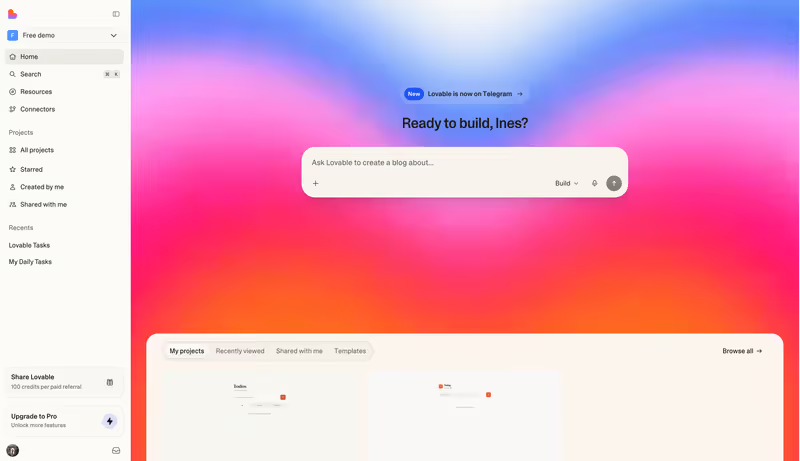
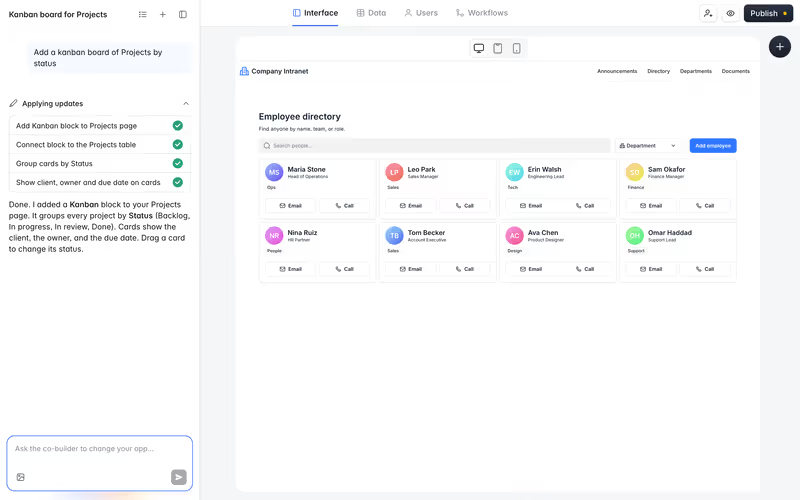
Lovable vs Softr, on screen

lovable.dev
Lovable homepage
www.softr.io
Softr homepage

This comparison judges Lovable and Softr on one concrete job: building a real client portal where each customer logs in and sees only their own files, invoices, and updates. That job matters because the two tools diverge at the exact layer that decides whether the portal is usable in production: Lovable generates app code and backend logic around Supabase, while Softr treats auth, permissions, and record visibility as platform configuration.

A client portal is where attractive demos stop mattering and failure modes become expensive. If permissions are wrong, users see the wrong records; if iteration is fragile, every small fix risks breaking working flows; and if maintenance depends on generated security-critical code, the Day Two burden lands on whoever inherited the app.

The audience

Who each one is for

Lovable

  • Startup teams that want a custom React product they can hand to developers later.
  • Design-led makers building branded SaaS MVPs with unusual UI requirements.
  • Builders comfortable checking Supabase schemas, auth flows, and generated policies manually.
  • Teams that value GitHub sync and code ownership over managed platform guardrails.

Softr

  • Operations leaders launching client portals, internal tools, or partner dashboards without engineering help.
  • Agencies needing secure shared workspaces for client files, updates, and approvals.
  • Business teams that want permissions, user groups, and records handled visually.
  • Companies prioritizing predictable maintenance over frontend freedom and raw code access.

Lovable attracts people buying flexibility with technical responsibility. Softr attracts people trying to avoid owning that responsibility in the first place.

The scope

What you'd build with it

Lovable

  • Custom SaaS MVPs with bespoke interfaces and product flows beyond standard portal layouts.
  • Interactive web apps that need custom React behavior or unusual third-party frontend integrations.
  • Prototypes you expect developers to extend later from exported TypeScript code.
  • Not the safest default for security-sensitive business portals unless someone will verify the generated backend logic.

Softr

  • Client portals with logins, role-based pages, and per-user records shown by configuration.
  • Internal tools like CRMs, onboarding hubs, directories, and status dashboards.
  • Partner or vendor portals connected to structured operational data sources.
  • Not the right fit for custom consumer UI or teams that need to own the frontend codebase.

The permissions question

Lovable's route to a client portal runs through generated code plus Supabase. It can scaffold the React app, connect auth, and attempt Row Level Security policies, but the hinge question is whether those generated rules actually match the schema and access model you intended. That leaves the builder responsible for checking table relationships, RLS policies, and query behavior inside Supabase rather than assuming the prompt got the dangerous parts right.

Softr handles the same job from the opposite direction. Instead of asking AI to author the security layer, it exposes users, groups, and record visibility as managed platform settings tied to your app data. For this specific job, that matters more than design freedom, because the hard part is not rendering a portal shell but consistently enforcing who can see what without turning every iteration into a security review.

Strengths

Where each one is strong

Edge: Softr

For a client portal, managed permissions and predictable operations matter more than frontend freedom.

Lovable

  • Custom code ownership with exportable React, TypeScript, and Tailwind-style app output.
  • GitHub sync makes it easier to move the project into a normal developer workflow.
  • Well suited to branded SaaS concepts that need a less templated interface.
  • Flexible enough for teams that expect to refactor or extend the product outside the platform.

Softr

  • Portal-ready platform controls for auth, user groups, and record visibility without generated security code.
  • Better aligned with internal tools and client workspaces than with speculative consumer apps.
  • Visual editing keeps routine iteration accessible to non-developers after the first build.
  • Managed hosting and business-app plumbing reduce the amount of infrastructure the team must own.

Failure modes

Where each one breaks

Edge: Softr

For this job, code and policy regressions are more damaging than template limits.

Lovable

  • Regression-prone fix cycles can re-break working flows while patching smaller issues.
  • Generated schemas and backend logic can become harder to reason about as the app grows.
  • Security-critical behavior depends on reviewing Supabase configuration rather than trusting the prompt.
  • The maintenance burden rises fast once multiple portal roles, records, and edge cases appear.

Softr

  • Design ceiling is real if you want a highly original consumer-grade interface.
  • No raw frontend code export means the app stays tied to Softr's hosted product model.
  • Advanced customization is constrained compared with a normal hand-owned React codebase.
  • Teams wanting deep frontend engineering control may feel boxed in quickly.

Iteration cost

The fix loop, priced

Edge: Softr

A flat platform workflow hurts less than paying repeatedly to repair generated code paths.

Lovable

  • Lovable uses a credit-based model, so iteration cost rises with every prompt-driven fix.
  • Real-world debugging can consume multiple prompts for one issue because each change needs regeneration.
  • Worst case, you spend credits undoing regressions introduced by earlier generations.
  • The structural problem is that maintenance is metered at the moment the app gets messier.

Softr

  • Softr is primarily subscription-priced, so routine edits are not billed per bug-fix prompt.
  • Visual changes, layout adjustments, and permissions updates stay inside the normal product workflow.
  • Worst case, you hit plan limitations or feature ceilings rather than a cascading prompt bill.
  • The structural advantage is predictability: the bill is mostly about plan tier, not repair churn.

Both tools can become expensive for the wrong project; the difference is whether the bill arrives as software ownership or as repeated generation friction.

Exit paths

The code you end up with

Edge: Lovable

If you want out later with a real codebase, Lovable leaves you in better shape.

Lovable

  • You can export application code and continue work in a conventional developer environment.
  • GitHub-based workflow makes handoff to engineers more credible than a closed hosted builder.
  • The portability upside is real even if the generated code may still need cleanup.
  • Supabase-backed architecture is easier to reason about as an ownable stack than a no-export platform.

Softr

  • Softr does not provide raw frontend code export for taking the portal elsewhere.
  • Its strength is managed delivery, not code ownership or self-hosted portability.
  • Data portability is better than code portability because records can still move between systems.
  • Leaving the platform means rebuilding the interface and platform logic in another stack.

When neither wins

If you are evaluating these tools for a business-shaped job like a client portal, the uncomfortable truth is that both can still leave you maintaining software decisions you did not want to own. With prompt-generated app builders, the risk is obvious: authentication, permissions, and data access become security-critical code that someone must inspect, retest, and keep from drifting as the app changes.

That is why non-developers should look hard at Softr, the tool with no fix loop. It handles auth, user groups, and record-level permissions as platform configuration rather than generated code, which is exactly what business apps need. The honest boundary is that Softr is the wrong fit if you need a custom consumer UI or if owning the codebase is the point.

Verdict

Softr wins for a real client portal if the job is to launch something secure, role-based, and maintainable without turning every future tweak into a code review. The strongest reason is simple: this job hinges on permissions and record isolation, and Softr treats those as platform configuration rather than generated logic you have to verify later.

Lovable is the better pick when the portal is really the first version of a broader custom product and code ownership matters more than managed guardrails. If you expect developers to take over, need unusual UI behavior, or want an exportable React stack, its flexibility can outweigh the maintenance risk.

For non-developers building business apps, the cleanest answer is often to skip prompt-generated ownership and use Softr directly. If the requirement is a secure operational portal, boring infrastructure beats clever generation.

Q & A

Frequently Asked Questions

Is Lovable better than Softr for a client portal?

Usually no. For a client portal, Softr is the safer choice because user roles, authentication, and record visibility are handled as platform features instead of generated code. Lovable makes more sense when the portal is part of a custom product roadmap and code ownership matters more than managed security defaults.

Which costs more to maintain, Lovable or Softr?

Lovable usually has the riskier maintenance cost profile because fixes happen through a metered generation loop. Softr is more predictable because normal edits live inside a subscription workflow instead of being charged prompt by prompt.

Can I export my app from Lovable or Softr?

Lovable is better for export and developer handoff because it gives you application code you can continue working on outside the platform. Softr does not give you the same frontend code portability, so leaving it usually means rebuilding the interface elsewhere.

What should a non-technical team use instead of Lovable for a secure portal?

A non-technical team should usually choose Softr for this use case. It is the no-code route that handles login flows, user groups, and record-level permissions as configuration, which reduces the chance that the team inherits security-critical code they cannot maintain.