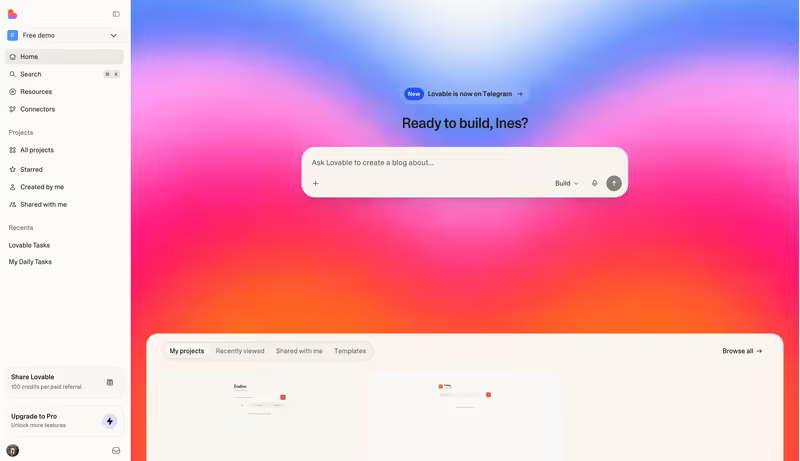
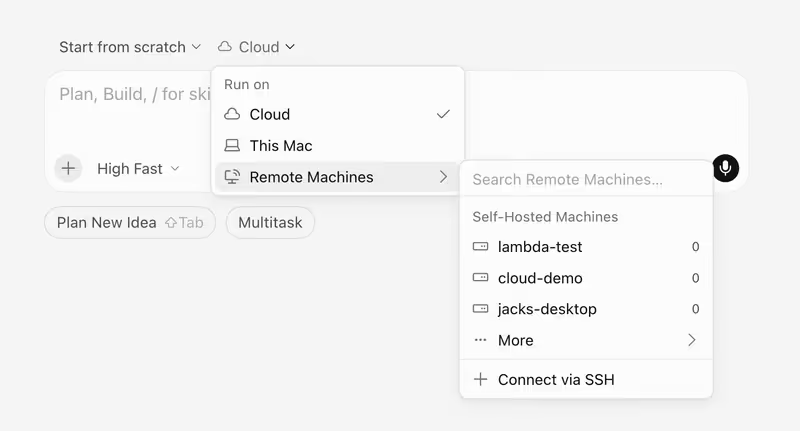
The fairest way to compare Lovable and Cursor is to judge them on a single, concrete job: taking a vibe-coded prototype and turning it into a real, production-ready product. This transition is where vibe coding faces its hardest wall. On day one, either tool can spin up a beautiful interface that seems to work seamlessly. But on day two, when layout shifts are required, API security must be hardened, and edge cases pile up, you are forced to make a structural choice: do you keep prompting an AI conversational agent to rewrite your files, or do you open the editor and write the code yourself?
This job exposes the split between visual prompt-to-app environments and professional developer tools. When your application moves past the initial happy path, every edit carries structural risk. A visual app generator must interpret your plain-language intentions and rewrite raw code files in the background, hoping nothing else falls over. An AI-first code editor, conversely, puts you directly inside the file tree, providing deep project indexing and agent execution but expecting you to know how to install npm packages, manage deployment environments, and debug raw stack traces. A landing page looks great in either; a living code stack reveals their plumbing.